
 Posts


Travel Tour to New Caledonia
Tourism Culture and History tour
New Caledonia in general
Clans and coffee with milk, reef and slavery, massacres and Melanesian dishes of the day. New Caledonia is a good example of the saying, "the bread which comes from eating some of the sweat and blood of others." France remains attached to this part of the world, and has sent its Marines several times to keep the population at bay.
The inhabitants of New Caledonia Caldoches-, m-Kanaks hastily look to the future, perhaps not optimism, but with the firm intention to end the senseless cycle of violence that was unleashed in the 1980s. The archipelago offers a wide range of options to travelers, from reef diving in immaculate dinner at a restaurant of French cuisine, from hiking through the jungle to leave up to the Club Med in Hienghene. If the respect for local customs, the open mind and sense of humor, the trip to New Caledonia will become an unforgettable experience.
best time to go New Caledonia
The traveler can choose any time of year to discover New Caledonia. If hurricanes or mosquitoes are a concern, should be avoided months between November and April, if the trip is planned in order to attend any of their festivals, the highlight of the Avocado Festival (in the second half of May) la Foire du Bourail (late August to early September) and Equinox (in October). If you have knowledge of diving, do not miss the mosaic of color that comes with the coral spawning in early summer.
New Caledonia festivals and Holidays
The most prominent of the celebrations Kanaks, the Yam Festival, takes place in mid-March, but generally limits the presence of tourists. New Caledonians celebrate Bastille Day on July 14, families and children gather at dusk the day before, carrying flashlights and roam the streets until you reach the Place des Cocotiers, where fireworks are held. The next day in the morning is a military parade. In the second half of May has the most festivals: the Festival of the avocados in need, the celebration of the harvest in Maré, the Dodge Touques des in Nouméa, where it competes with decorative boats along the Anse Vata and Pacific Tempo, a three-day music festival in the capital, with performers from around the Pacific.
La Foire du Bourail campestre is a great celebration, with a rodeo, a livestock shows, horse races and a beauty contest, held in late August or early September. The Day of New Caledonia on September 24, commemorates the demand of Admiral Despointes Fevrier Auguste of France to New Caledonia. Whites have a holiday at work, while the Kanaks it as a time for regret. The Equinoxe is a biennial festival of theater, dance and contemporary music which takes place in Nouméa in October, and at the end of the month or early November, a popular Sound and Light Show at Fort Teremba (FOA).
New CaledoniaAttraction and places
Nouméa
After the bombings and the riots of the 1980s, Nouméa began a new phase of construction impetuous unparalleled since the days of the nickel boom. The current political protest over the forced redundancies and cuts in services by the dependence of the French administration. From Anse Vata in the south, the most prestigious beach Nouméa, to Koutiou and Yahoue neighborhoods in the North, the city is hardly 15 km.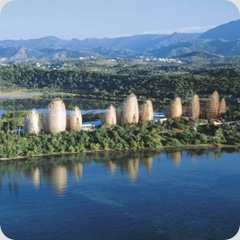 The town stretches along the bay of the Moselle to the west, a beautiful port as a good haven for cruise ships, fishing vessels and the fleet of private yachts. Heading west Nouville site, where he was located on the first penal colony and now is linked to land by the embankment created by the nickel smelters. North of town center residential and industrial areas are of little interest. The eastern end of the peninsula are bienestantes waterfront neighborhoods of Ste Marie and Ouémé.
The Cultural Center Jean-Marie Tjibaou is discovered as the most innovative and interesting city, some 10 km from downtown. Designed to show the Kanaks ties with their land, it is a happy blend of contemporary architecture with the indigenous cultural beliefs; sample objects of his legacy and cultures of Oceania. Bernheim Library, the largest in the capital, offers a pleasant and relaxed atmosphere despite the surrounding traffic. To really escape vehicles, nothing better than a visit to the Aquarium at Anse Vata. Has copies of the strange and unusual marine life, from sponges and coral to huge fish sharp teeth.
East of town lies the Valley of the colonists, a bustling area where many immigrants live today Kanak and Polynesian. Nouville worth a visit through the ruins of the prison and isolated bay Kuendu, an ideal spot for swimming and diving. You can also go to the Latin Quarter, a nod to the famous Parisian namesake, near Port Moselle and south of the population. If you really want to live an unclean, travelers should not miss (and it is difficult to avoid) the Doniambo Nickel Smelter, a site full of unsightly stacks and located in the north of the town.
Anse Vata offers the finest luxury accommodations, while having some economic hotels between four and five stars. The youth hostel in the center, offers the cheapest accommodation, as well as splendid views over the bay of the Moselle, but there is a wide choice to spend the night (from the spartan to the luxurious) in the city and the Bay des Citrons. It may be interesting to take a look at the Latin Quarter and the bay of Citrons to find affordable restaurants, although the center has plenty of bars.
Isle of Pines
Along with Grande Terre, is virtually the only part of New Caledonia to tourists. Its major attraction lies in its extraordinary beaches and bays. Among its inhabitants abound Kanaks. The fact that the island was on the sidelines of the ongoing violence in the 1980s could be a consequence of extremely warm and friendly islanders for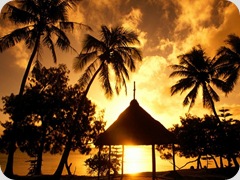 travelers. The best beaches are located in Kuto, the area of maximum interest. Most accommodations and restaurants are located in this area, and Bay Kuto natives go fishing at dusk. Residenciadel the governor of the penal colony, the Gendarmerie, the ruins of the prison and the cemetery of the deportees also deserve a visit.
A quiet tour of 45 minutes leads to the summit of Pic N_Ga (262 m) and on a clear day the view can cover the island entirely. There are many caves, including the cave Wèmwânyi, the most famous, and the cave d_Ouatchia, a narrow passage with impressive rock formations underground. Golden Bay is a protected estuary water more beautiful turquoise, surrounded by huge pine trees that give their name to the island. The Isle of Pines has adequate air connections from Noumea, and a ferry, various cargo ships also accept the carriage of passengers. Is 50 km southeast of Grande Terre.
Hienghène
Hienghène account in their power with two main advantages: the fact of having been the scene of the murder of ten-independence in 1984, and Lindéralique Cliffs, spectacular limestone cliffs of black, which are kept in some places up to 60 m above the level of sea. Are crowned by sharp pinnacles, and has numerous caves inhabited by swallows and flying foxes (the big local bat). A Club Med south of Hienghène offers luxurious accommodation and an excellent imitation of a Melanesian village. Ma Goa Cultural Center Bwarhat includes a small museum and a hall for performances, which offer occasional plays, music and storytelling of legends. Equally feasible to travel the Chemin des Arabs in the mountains of central Grande Terre to the west coast, the trip was three days getting longer. Hienghène is located on the northeast coast of Grande Terre and is accessed via a paved highway that crosses the mountains and then hugs the coast, discovered a spectacular coastal scenery. The most appropriate form of access is via a bus from the capital.
Bourail
With a population of only 4350 inhabitants, is found as a Bourail dynamic settlement of the colonial era and the second city, from the standpoint of extension of New Caledonia. It presents little more dynamic than the Arabic cemetery and the cemetery of the Pacific War of New Zealand. Hunting and fishing are the favorite pastimes among Caldoches local community and its most famous attraction is a strange rock formation comprising the Percée Roche. Neighbors say it represents a face, and at low tide you can climb to its summit. The early birds can see the turtles in Turtle Bay. The best beach in the area, Poe, has fine white sand, shell color and an excellent dive for the seabed. TN1, in excellent condition, runs along the mountain until Bourail, about 150 km northwest of Noumea. You can access this town by bus or car
Park Land of the Rivière Bleue
Although the holidays and weekends is crowded with visitors during the week you can enjoy the park virtually alone. This site is ideal for nature lovers and hikers. Has virgin forests of pine and pine Kauri (including giant Grand Kaori species, estimated to be about a thousand years old), ponds for swimming and a multitude of paths. The avian fauna of the park includes the red-crowned parakeets, the melífago black and cagou, the national bird of New Caledonia. The latter, which came to be threatened with extinction, have a presence again thanks to a program for breeding in captivity. It is situated 43 km inland along the road from Nouméa RT2, and is accessed through the bus that goes to yacht. Inside the protected area has not enabled any means of public transport.
La Foa
The small town of La Foa is surrounded by lush cane fields and beautiful pine and black pine wood. The city has overcome many difficulties, from its origins as a penal settlement to the assassination of two leaders of FLNKS in 1985. The historic bridge Passerelle Marguerite two was designed by Gustave Eiffel's disciples, and, despite being underpinned by a wider construction, continues to impress. Fort Teremba, seated on a plain that leads into the bay Te remba, became the headquarters of the colonial military and was besieged by the Kanaks in 1878 during the great insurrection. It is now used as a setting for the Sound and Light Show which is held in late October or early November. Farino, 3 km, has beautiful views of La Foa and sea and has a popular market is organized on the second Sunday of each month. A bus line runs 110 km from Nouméa to La Foa weekdays.
Poindimié
The beaches are rocky, but worth a good swim or a dive session. The islands and reefs located off the city is considered one of the best areas of New Caledonia to practice immersion. For lovers of architectural integration, the Vasarely mosaic swimming pool at the south end of town, well worth a visit. Victor Vasarely, the father of Op Art, designed the mosaic in order to illuminate the gray areas and urbanized. The lackluster War Memorial is located on the hill to commemorate the U.S. involvement in the Pacific war. A few minutes by car north of the city, the RT3 was located Tié the Mission, a church built in 1866. Poindimié is approximately 300 km from Noumea on the northeast coast of Grande Terre, and the best access is via a bus that follows the highway RT3.
Poum
Poum, at the end of TN1 in the northern tip of Grande Terre, is formed by a community of about three hundred thousand inhabitants. If the weather is messed up, it can be very welcoming, and despite not providing excessive tourist attractions, if over some time and have own transport is worth a trip to Boat Pass, also known as Pointe Naharia. This wild and desolate peninsula is exposed to the sea and surrounded by meadows, pine and palm trees araucanos.
Along the bay are excellent Banares and deserted b eaches Nennon and Kejaon. There are flights between Noumea and Koumac, where you can catch a bus. Poum lies 340 km northwest of Noumea, and if arriving by bus should be transhipped in Koumac.
Tiga
Passengers counted up to this little coral atoll belonging to the archipelago of the Loyalty. In the area of the island, the cliffs are full of underwater coral and fish, and stands as an ideal spot for diving. Its deserted beaches are perfect for lying down and resting, and while no formal accommodation can camp at the airport and the majority of private land, if you get the agreement of the owner. 380 tiganos inhabit the far northwest of the island where the reef is more accessible and the area is less exposed to the weather elements. The airstrip Tiga is located south of the village and offers four flights a week from Inter Maré and Lifou, one every seven days from Nouméa.
Poum, at the end of TN1 in the northern tip of Grande Terre, is formed by a community of about three hundred thousand inhabitants. If the weather is messed up, it can be very welcoming, and despite not providing excessive tourist attractions, if over some time and have own transport is worth a trip to Boat Pass, also known as Pointe Naharia. This wild and desolate peninsula is exposed to the sea and surrounded by meadows, pine and palm trees araucanos.
Along the bay are excellent Banares and deserted beaches Nennon and Kejaon. There are flights between Noumea and Koumac, where you can catch a bus. Poum lies 340 km northwest of Noumea, and if arriving by bus should be transhipped in Koumac.
New Caledonia activities
In the enclave that the Caledonians proclaim as the second largest coral reef in the world, diving and diving activities become spectacular. During the summer the water is somewhat cloudy because of precipitation during the wet season, but on calm winter days underwater visibility can reach 50 m. Some of the areas more suited for diving are located in the Isle of Pines, Poindimié the Amédée islet, Maré and south of Grande Terre. Swimming is a good option in most places, because New Caledonia has many beautiful beaches, the best are on the east coast, in the Loyalty Islands and the Isle of Pines.
Walking on foot and on horseback are popular, it is possible to organize excursions to horse two or three days through the interior of Grande Terre. There are abundant opportunities for caving on Grande Terre, the Isle of Pines and Loyalty. If you are not afraid of heights, you can also try the microlight flight from Noumea to Lifou and the Loyalty Islands, and any loose hair is also recommended practice paragliding. Dependence on France as it is, cycling is emerging as a major hobby, even an organized version of the Tour de France every September.
New Caledonia History
Are unaware of many details oceanianos, who arrived from Southeast Asia about fifty thousand years ago and settled in the western Pacific. Between 7000 and 5000 a.C. new waves of migration from these sources contributed to this region agriculture, canoe building and development of pottery. Bequeathed burial mounds on Grande Terre and the Isle of Pines, as well as petroglyphs on the main island. The area received new migrations from Polynesia and Samoa existing between XI and XVIII centuries. At the end of the sixteenth century the Spaniards crossed the Pacific in search of the mythical Terra Australis, and attracted by the stories about the noble savage and the paradises of the Pacific, British and French followed the steps right away.
The British explorer James Cook sighted Grande Terre in 1774 and named New Caledonia, to remind the Scottish Highlands, called Caledonia by the Romans. Fourteen years later, King Louis XVI sent an expedition under the command of Count de La Pérouse never arrived due to a cyclone off Vanikolo in Solomon Islands. Admiral Bruny D_Entrecasteaux was sent to find three years later and, along with part of his crew landed and took a month to cross on foot north of Grande Terre. The first Westerners who stayed longer were British and American whalers, which enables a station for extracting oil in Lifou in the Loyalty Islands in 1840. Followed sandalwood loggers, whose establishment in the archipelago generate the initial tension. In 1853, Napoleon III of France annexed Grande Terre under the pretext of protecting missionaries Gauls. The French settled and ruled by a military regime during the remainder of the nineteenth century.
As the French missions iban gaining more power, traditional customs were disintegrating and the modus vivendi of the Islanders was threatened. Slavery, which continued until the twentieth century, and new diseases decimated the more so to the people. The French saw the Pacific as an ideal place to locate the accused, and their first convicts deported in May 1864. Most of these were political prisoners from the Paris Commune, but others were the outcasts and thieves from the streets of the metropolis. When deportation was banned in 1879, France had already sent to twenty-one thousand prisoners. The discovery of nickel and the arrival of free settlers exacerbated racial conflicts, as more Europeans invaded tribal lands. In 1878, a seven-month revolt against French domination killed 200 French and 1,200 natives. The repression that followed further weakened their culture.
Kanaks Many were recruited in the First World War. During the second major contention, forty thousand U.S. soldiers serving in the base of New Caledonia, which employed many Indians. These facilities remained relatively stable relations between blacks and whites and Aborigines were a real salary for the first time. After World War II, the colony's status was raised to the French overseas territory.
Kanaks began claiming independence, and the leader Naisseline Maré prepared a Status of Natives, arguing that since it had fought and died in defense of the French flag, deserve the same rights as citizens Gauls. The Indians gained citizenship in 1946. In 1953 he founded the first political party, Union Calédonienne, and four years later won the right to vote. The rise of nickel in the 1960s led to rapid growth in Noumea, and increased both Kanak agitation for land rights and the desire of Caldoches to obtain a greater share of their independent remote administration. The first students trained in French universities returned to New Caledonia in the late sixties. Had witnessed the student protests of May 1968 in Paris, and the awareness and political unrest was growing.
The independence and the return of land was key in 1977, but the Kanaks had already become a minority in their own territory. The turning point of the independence movement happened in 1984, starting two years of widespread chaos, known as Les Evènements. Disenchanted with the empty promises of reform of the French socialist government, several independence parties formed the FLNKS (Front de Libération National Kanak et Socialiste), with Jean-Marie Tjibaou as its first leader. The Front boycotted the 1984 local elections and the violence shocked the country. When one of the most radical leaders of the FLNKS was assassinated by paramilitaries near La Foa, riots erupted across the board. France sent troops immediately and declare a state of emergency.
Boycotts electoral developments, followed by assassinations and bombings that destroyed the center of Nouméa, later provided some concessions. France is enmity with Australia and the United Nations in 1986 when the UN stood back to this area in its list of decolonized. The French interpreted this as an intrusion into its affairs and expelled the Australian consul general from Noumea, arguing she had played a decisive role in this process. Tjibaou was assassinated in 1989 by a group that considered Kanaks FLNKS was sold with the peace agreement of 1988. The violence slowed during the 1990s, and the words that sound more at present on the right and in many circles independentistas are negotiated consensus and independence.
The Noumea Accords of early 1998 were a blow to national liberation, then postponing the independence of the territory until 2013. The reason for this delay fell on fears that a referendum could rise further violence. The likelihood is that France considers New Caledonia as a political and economic well not want to lose.
Meanwhile, the issue of Independence defines the political and ethnic relations. In June 2004, was elected President Marie-Noelle Themerea, the party's anti-independence Future Together, and promised to implement social, economic and fiscal
New Caledonia culture & people
Between Kanaks, dance has become a high art. The traditional dance Pilou narrates stories of birds, marriages, cyclones or battle plans, although colonial authorities banned it in 1951 for the intense energy and the state of trance was, the dancers (and even the occasional dinner of human flesh). The music is a fundamental element in all the celebrations, and the instrumental range includes shells, rhythm instruments and bamboo flutes. The New Caledonians Caldoches-white, mostly descendants of French-convicts, have forged their own culture, more akin to the rural Australian and American than the French city. Among them are popular rodeos and fairs countryside. Meters in their name to accommodate more recent immigrants from France, and is more likely to be found dining at good restaurants and shopping in the most modern looking at the tail of a cow.
The French is the official language and there are 33 Melanesian-Polynesian dialects, but with the ignorance they have suffered by the colonists, has not been any unified indigenous language. The clan, not the individual, is the most important element of traditional culture, along with the coutumes, a code that includes rituals and social interaction between clans. Also remains a critical link with the ancestors of the individuals. Kanaks are Melanesians, blacks in the western Pacific associated with the Aborigines of Australia and Papua, and self-tive ouere (brothers of the earth).
New Caledonia's cuisine is based on certain commodities such as fish, coconut, banana, taro, sweet potatoes and yams. Lobster, crab meat, dugong and turtle are also traditional food sources, like the flying fox (the big local bat). While much of the indigenous food has been replaced by canned and processed ingredients, you can still find the bougna, a delicious combination of taro, yam, sweet potato, banana and chunks of chicken, crab or lobster wrapped in a sheet bananas and cooked in a stone oven. Many restaurants serve French cuisine, with all their peculiarities, although establishments Vietnamese, Chinese and Indonesians tend to offer higher quality. The French, of course, take their coffee and their wine seriously, and both are excellent
Tourism Culture and History tour
New Caledonia in general
Clans and coffee with milk, reef and slavery, massacres and Melanesian dishes of the day. New Caledonia is a good example of the saying, "the bread which comes from eating some of the sweat and blood of others." France remains attached to this part of the world, and has sent its Marines several times to keep the population at bay.

The inhabitants of New Caledonia Caldoches-, m-Kanaks hastily look to the future, perhaps not optimism, but with the firm intention to end the senseless cycle of violence that was unleashed in the 1980s. The archipelago offers a wide range of options to travelers, from reef diving in immaculate dinner at a restaurant of French cuisine, from hiking through the jungle to leave up to the Club Med in Hienghene. If the respect for local customs, the open mind and sense of humor, the trip to New Caledonia will become an unforgettable experience.
best time to go New Caledonia
The traveler can choose any time of year to discover New Caledonia. If hurricanes or mosquitoes are a concern, should be avoided months between November and April, if the trip is planned in order to attend any of their festivals, the highlight of the Avocado Festival (in the second half of May) la Foire du Bourail (late August to early September) and Equinox (in October). If you have knowledge of diving, do not miss the mosaic of color that comes with the coral spawning in early summer.
New Caledonia festivals and Holidays
The most prominent of the celebrations Kanaks, the Yam Festival, takes place in mid-March, but generally limits the presence of tourists. New Caledonians celebrate Bastille Day on July 14, families and children gather at dusk the day before, carrying flashlights and roam the streets until you reach the Place des Cocotiers, where fireworks are held. The next day in the morning is a military parade. In the second half of May has the most festivals: the Festival of the avocados in need, the celebration of the harvest in Maré, the Dodge Touques des in Nouméa, where it competes with decorative boats along the Anse Vata and Pacific Tempo, a three-day music festival in the capital, with performers from around the Pacific.
La Foire du Bourail campestre is a great celebration, with a rodeo, a livestock shows, horse races and a beauty contest, held in late August or early September. The Day of New Caledonia on September 24, commemorates the demand of Admiral Despointes Fevrier Auguste of France to New Caledonia. Whites have a holiday at work, while the Kanaks it as a time for regret. The Equinoxe is a biennial festival of theater, dance and contemporary music which takes place in Nouméa in October, and at the end of the month or early November, a popular Sound and Light Show at Fort Teremba (FOA).
New CaledoniaAttraction and places
Nouméa
After the bombings and the riots of the 1980s, Nouméa began a new phase of construction impetuous unparalleled since the days of the nickel boom. The current political protest over the forced redundancies and cuts in services by the dependence of the French administration. From Anse Vata in the south, the most prestigious beach Nouméa, to Koutiou and Yahoue neighborhoods in the North, the city is hardly 15 km.
 The town stretches along the bay of the Moselle to the west, a beautiful port as a good haven for cruise ships, fishing vessels and the fleet of private yachts. Heading west Nouville site, where he was located on the first penal colony and now is linked to land by the embankment created by the nickel smelters. North of town center residential and industrial areas are of little interest. The eastern end of the peninsula are bienestantes waterfront neighborhoods of Ste Marie and Ouémé.
The Cultural Center Jean-Marie Tjibaou is discovered as the most innovative and interesting city, some 10 km from downtown. Designed to show the Kanaks ties with their land, it is a happy blend of contemporary architecture with the indigenous cultural beliefs; sample objects of his legacy and cultures of Oceania. Bernheim Library, the largest in the capital, offers a pleasant and relaxed atmosphere despite the surrounding traffic. To really escape vehicles, nothing better than a visit to the Aquarium at Anse Vata. Has copies of the strange and unusual marine life, from sponges and coral to huge fish sharp teeth.
East of town lies the Valley of the colonists, a bustling area where many immigrants live today Kanak and Polynesian. Nouville worth a visit through the ruins of the prison and isolated bay Kuendu, an ideal spot for swimming and diving. You can also go to the Latin Quarter, a nod to the famous Parisian namesake, near Port Moselle and south of the population. If you really want to live an unclean, travelers should not miss (and it is difficult to avoid) the Doniambo Nickel Smelter, a site full of unsightly stacks and located in the north of the town.
Anse Vata offers the finest luxury accommodations, while having some economic hotels between four and five stars. The youth hostel in the center, offers the cheapest accommodation, as well as splendid views over the bay of the Moselle, but there is a wide choice to spend the night (from the spartan to the luxurious) in the city and the Bay des Citrons. It may be interesting to take a look at the Latin Quarter and the bay of Citrons to find affordable restaurants, although the center has plenty of bars.
Isle of Pines
Along with Grande Terre, is virtually the only part of New Caledonia to tourists. Its major attraction lies in its extraordinary beaches and bays. Among its inhabitants abound Kanaks. The fact that the island was on the sidelines of the ongoing violence in the 1980s could be a consequence of extremely warm and friendly islanders for
 travelers. The best beaches are located in Kuto, the area of maximum interest. Most accommodations and restaurants are located in this area, and Bay Kuto natives go fishing at dusk. Residenciadel the governor of the penal colony, the Gendarmerie, the ruins of the prison and the cemetery of the deportees also deserve a visit.
A quiet tour of 45 minutes leads to the summit of Pic N_Ga (262 m) and on a clear day the view can cover the island entirely. There are many caves, including the cave Wèmwânyi, the most famous, and the cave d_Ouatchia, a narrow passage with impressive rock formations underground. Golden Bay is a protected estuary water more beautiful turquoise, surrounded by huge pine trees that give their name to the island. The Isle of Pines has adequate air connections from Noumea, and a ferry, various cargo ships also accept the carriage of passengers. Is 50 km southeast of Grande Terre.
Hienghène
Hienghène account in their power with two main advantages: the fact of having been the scene of the murder of ten-independence in 1984, and Lindéralique Cliffs, spectacular limestone cliffs of black, which are kept in some places up to 60 m
 above the level of sea. Are crowned by sharp pinnacles, and has numerous caves inhabited by swallows and flying foxes (the big local bat). A Club Med south of Hienghène offers luxurious accommodation and an excellent imitation of a Melanesian village. Ma Goa Cultural Center Bwarhat includes a small museum and a hall for performances, which offer occasional plays, music and storytelling of legends. Equally feasible to travel the Chemin des Arabs in the mountains of central Grande Terre to the west coast, the trip was three days getting longer. Hienghène is located on the northeast coast of Grande Terre and is accessed via a paved highway that crosses the mountains and then hugs the coast, discovered a spectacular coastal scenery. The most appropriate form of access is via a bus from the capital.
Bourail
With a population of only 4350 inhabitants, is found as a Bourail dynamic settlement of the colonial era and the second city, from the standpoint of extension of New Caledonia. It presents little more dynamic than the Arabic cemetery and the cemetery of the Pacific War of New Zealand. Hunting and fishing are the favorite pastimes among Caldoches local community and its most famous attraction is a
 strange rock formation comprising the Percée Roche. Neighbors say it represents a face, and at low tide you can climb to its summit. The early birds can see the turtles in Turtle Bay. The best beach in the area, Poe, has fine white sand, shell color and an excellent dive for the seabed. TN1, in excellent condition, runs along the mountain until Bourail, about 150 km northwest of Noumea. You can access this town by bus or car
Park Land of the Rivière Bleue
Although the holidays and weekends is crowded with visitors during the week you can enjoy the park virtually alone. This site is ideal for nature lovers and hikers. Has virgin forests of pine and pine Kauri (including giant Grand Kaori species, estimated to be about a thousand years old), ponds for swimming and a multitude of paths. The avian fauna of the park includes the red-crowned parakeets, the melífago black and cagou, the national bird of New Caledonia. The latter, which came to be threatened with extinction, have a presence again thanks to a program for breeding in captivity. It is situated 43 km inland along the road from Nouméa RT2, and is accessed through the bus that goes to yacht. Inside the protected area has not enabled any means of public transport.
La Foa
The small town of La Foa is surrounded by lush cane fields and beautiful pine and black pine wood. The city has overcome many difficulties, from its origins as a penal settlement to the assassination of two leaders of FLNKS in 1985. The historic bridge Passerelle Marguerite two was designed by Gustave Eiffel's disciples, and, despite
 being underpinned by a wider construction, continues to impress. Fort Teremba, seated on a plain that leads into the bay Te remba, became the headquarters of the colonial military and was besieged by the Kanaks in 1878 during the great insurrection. It is now used as a setting for the Sound and Light Show which is held in late October or early November. Farino, 3 km, has beautiful views of La Foa and sea and has a popular market is organized on the second Sunday of each month. A bus line runs 110 km from Nouméa to La Foa weekdays.
Poindimié
The beaches are rocky, but worth a good swim or a dive session. The islands and
 reefs located off the city is considered one of the best areas of New Caledonia to practice immersion. For lovers of architectural integration, the Vasarely mosaic swimming pool at the south end of town, well worth a visit. Victor Vasarely, the father of Op Art, designed the mosaic in order to illuminate the gray areas and urbanized. The lackluster War Memorial is located on the hill to commemorate the U.S. involvement in the Pacific war. A few minutes by car north of the city, the RT3 was located Tié the Mission, a church built in 1866. Poindimié is approximately 300 km from Noumea on the northeast coast of Grande Terre, and the best access is via a bus that follows the highway RT3.
Poum
Poum, at the end of TN1 in the northern tip of Grande Terre, is formed by a community of about three hundred thousand inhabitants. If the weather is messed up, it can be very welcoming, and despite not providing excessive tourist attractions, if over some time and have own transport is worth a trip to Boat Pass, also known as
 Pointe Naharia. This wild and desolate peninsula is exposed to the sea and surrounded by meadows, pine and palm trees araucanos.
Along the bay are excellent Banares and deserted b eaches Nennon and Kejaon. There are flights between Noumea and Koumac, where you can catch a bus. Poum lies 340 km northwest of Noumea, and if arriving by bus should be transhipped in Koumac.
Tiga
Passengers counted up to this little coral atoll belonging to the archipelago of the Loyalty. In the area of the island, the cliffs are full of underwater coral and fish, and stands as an ideal spot for diving. Its deserted beaches are perfect for lying down and resting, and while no formal accommodation can camp at the airport and the majority of private land, if you get the agreement of the owner. 380 tiganos inhabit the far northwest of the island where the reef is more accessible and the area is less exposed to the weather elements. The airstrip Tiga is located south of the village and offers four flights a week from Inter Maré and Lifou, one every seven days from Nouméa.
Poum, at the end of TN1 in the northern tip of Grande Terre, is formed by a
 community of about three hundred thousand inhabitants. If the weather is messed up, it can be very welcoming, and despite not providing excessive tourist attractions, if over some time and have own transport is worth a trip to Boat Pass, also known as Pointe Naharia. This wild and desolate peninsula is exposed to the sea and surrounded by meadows, pine and palm trees araucanos.
Along the bay are excellent Banares and deserted beaches Nennon and Kejaon. There are flights between Noumea and Koumac, where you can catch a bus. Poum lies 340 km northwest of Noumea, and if arriving by bus should be transhipped in Koumac.
New Caledonia activities
In the enclave that the Caledonians proclaim as the second largest coral reef in the world, diving and diving activities become spectacular. During the summer the water is somewhat cloudy because of precipitation during the wet season, but on calm winter
 days underwater visibility can reach 50 m. Some of the areas more suited for diving are located in the Isle of Pines, Poindimié the Amédée islet, Maré and south of Grande Terre. Swimming is a good option in most places, because New Caledonia has many beautiful beaches, the best are on the east coast, in the Loyalty Islands and the Isle of Pines.
Walking on foot and on horseback are popular, it is possible to organize excursions to horse two or three days through the interior of Grande Terre. There are abundant opportunities for caving on Grande Terre, the Isle of Pines and Loyalty. If you are not afraid of heights, you can also try the microlight flight from Noumea to Lifou and the Loyalty Islands, and any loose hair is also recommended practice paragliding. Dependence on France as it is, cycling is emerging as a major hobby, even an organized version of the Tour de France every September.
New Caledonia History
Are unaware of many details oceanianos, who arrived from Southeast Asia about fifty thousand years ago and settled in the western Pacific. Between 7000 and 5000 a.C. new waves of migration from these sources contributed to this region agriculture, canoe building and development of pottery. Bequeathed burial mounds on Grande Terre and the Isle of Pines, as well as petroglyphs on the main island. The area received new migrations from Polynesia and Samoa existing between XI and XVIII centuries. At the end of the sixteenth century the Spaniards crossed the Pacific in search of the mythical Terra Australis, and attracted by the stories about the noble savage and the paradises of the Pacific, British and French followed the steps right away.
The British explorer James Cook sighted Grande Terre in 1774 and named New Caledonia, to remind the Scottish Highlands, called Caledonia by the Romans. Fourteen years later, King Louis XVI sent an expedition under the command of Count de La Pérouse never arrived due to a cyclone off Vanikolo in Solomon Islands. Admiral Bruny D_Entrecasteaux was sent to find three years later and, along with part of his crew landed and took a month to cross on foot north of Grande Terre. The first Westerners who stayed longer were British and American whalers, which enables a station for extracting oil in Lifou in the Loyalty Islands in 1840. Followed sandalwood loggers, whose establishment in the archipelago generate the initial tension. In 1853, Napoleon III of France annexed Grande Terre under the pretext of protecting missionaries Gauls. The French settled and ruled by a military regime during the remainder of the nineteenth century.

As the French missions iban gaining more power, traditional customs were disintegrating and the modus vivendi of the Islanders was threatened. Slavery, which continued until the twentieth century, and new diseases decimated the more so to the people. The French saw the Pacific as an ideal place to locate the accused, and their first convicts deported in May 1864. Most of these were political prisoners from the Paris Commune, but others were the outcasts and thieves from the streets of the metropolis. When deportation was banned in 1879, France had already sent to twenty-one thousand prisoners. The discovery of nickel and the arrival of free settlers exacerbated racial conflicts, as more Europeans invaded tribal lands. In 1878, a seven-month revolt against French domination killed 200 French and 1,200 natives. The repression that followed further weakened their culture.
Kanaks Many were recruited in the First World War. During the second major contention, forty thousand U.S. soldiers serving in the base of New Caledonia, which employed many Indians. These facilities remained relatively stable relations between blacks and whites and Aborigines were a real salary for the first time. After World War II, the colony's status was raised to the French overseas territory.
Kanaks began claiming independence, and the leader Naisseline Maré prepared a Status of Natives, arguing that since it had fought and died in defense of the French flag, deserve the same rights as citizens Gauls. The Indians gained citizenship in 1946. In 1953 he founded the first political party, Union Calédonienne, and four years later won the right to vote. The rise of nickel in the 1960s led to rapid growth in Noumea, and increased both Kanak agitation for land rights and the desire of Caldoches to obtain a greater share of their independent remote administration. The first students trained in French universities returned to New Caledonia in the late sixties. Had witnessed the student protests of May 1968 in Paris, and the awareness and political unrest was growing.
The independence and the return of land was key in 1977, but the Kanaks had already become a minority in their own territory. The turning point of the independence movement happened in 1984, starting two years of widespread chaos, known as Les Evènements. Disenchanted with the empty promises of reform of the French socialist government, several independence parties formed the FLNKS (Front de Libération National Kanak et Socialiste), with Jean-Marie Tjibaou as its first leader. The Front boycotted the 1984 local elections and the violence shocked the country. When one of the most radical leaders of the FLNKS was assassinated by paramilitaries near La Foa, riots erupted across the board. France sent troops immediately and declare a state of emergency.
Boycotts electoral developments, followed by assassinations and bombings that destroyed the center of Nouméa, later provided some concessions. France is enmity with Australia and the United Nations in 1986 when the UN stood back to this area in its list of decolonized. The French interpreted this as an intrusion into its affairs and expelled the Australian consul general from Noumea, arguing she had played a decisive role in this process. Tjibaou was assassinated in 1989 by a group that considered Kanaks FLNKS was sold with the peace agreement of 1988. The violence slowed during the 1990s, and the words that sound more at present on the right and in many circles independentistas are negotiated consensus and independence.
The Noumea Accords of early 1998 were a blow to national liberation, then postponing the independence of the territory until 2013. The reason for this delay fell on fears that a referendum could rise further violence. The likelihood is that France considers New Caledonia as a political and economic well not want to lose.
Meanwhile, the issue of Independence defines the political and ethnic relations. In June 2004, was elected President Marie-Noelle Themerea, the party's anti-independence Future Together, and promised to implement social, economic and fiscal
New Caledonia culture & people
Between Kanaks, dance has become a high art. The traditional dance Pilou narrates stories of birds, marriages, cyclones or battle plans, although colonial authorities banned it in 1951 for the intense energy and the state of trance was, the dancers (and even the occasional dinner of human flesh). The music is a fundamental element in all the celebrations, and the instrumental range includes shells, rhythm instruments and bamboo flutes. The New Caledonians Caldoches-white, mostly descendants of French-convicts, have forged their own culture, more akin to the rural Australian and American than the French city. Among them are popular rodeos and fairs countryside. Meters in their name to accommodate more recent immigrants from France, and is more likely to be found dining at good restaurants and shopping in the most modern looking at the tail of a cow.
The French is the official language and there are 33 Melanesian-Polynesian dialects, but with the ignorance they have suffered by the colonists, has not been any unified indigenous language. The clan, not the individual, is the most important element of traditional culture, along with the coutumes, a code that includes rituals and social interaction between clans. Also remains a critical link with the ancestors of the individuals. Kanaks are Melanesians, blacks in the western Pacific associated with the Aborigines of Australia and Papua, and self-tive ouere (brothers of the earth).
New Caledonia's cuisine is based on certain commodities such as fish, coconut, banana, taro, sweet potatoes and yams. Lobster, crab meat, dugong and turtle are also traditional food sources, like the flying fox (the big local bat). While much of the indigenous food has been replaced by canned and processed ingredients, you can still find the bougna, a delicious combination of taro, yam, sweet potato, banana and chunks of chicken, crab or lobster wrapped in a sheet bananas and cooked in a stone oven. Many restaurants serve French cuisine, with all their peculiarities, although establishments Vietnamese, Chinese and Indonesians tend to offer higher quality. The French, of course, take their coffee and their wine seriously, and both are excellent
New Caledonia map


