Cambodia Travel

Travel Tour to Cambodia
Tourism culture and History tour

Cambodia in general

Ancient temples, deserted beaches, mighty rivers, remote forests ... and, beyond Angkor, few visitors. Cambodia has emerged from the ashes after decades of war and isolation, which made it a country of atrocities, refugees, poverty and political instability. The magic of Angkor temples to attract back the tourists, who admired the cover, and the country is back on the map as a tourist destination in Southeast Asia.
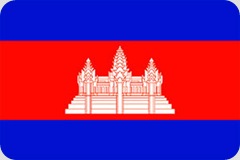
cambodia-flagCambodia, the successor state of the mighty Khmer empire that ruled much of which now occupy Vietnam, Laos and Thailand, boasts a rich culture, a beautiful French colonial capital, somewhat damaged, and a magnificent natural landscape. The country enjoys a relatively recent but stable peace, and is gradually attracting tourism, which currently chooses the neighboring Vietnam. However, the picture is not as gratifying as it may seem, because of the existence of landmines and banditry acts that occur in more remote areas. At present, the most traveled routes seem to be the best to visit.

Cambodia when to go

The most propitious time to visit Cambodia is focused in December and January, when humidity is bearable, temperatures, rainfall and cooler, unlikely. Since February, the levels amounts to be unbearable in April. A good time to visit Angkor, despite the humidity, the wet season is from May to October, because the pits are overflowing and the foliage is lush. However, we should avoid travel to the northwestern regions of the country during these months, because the roads are flooded and the journey is hard. In early November, we celebrate the country's largest festival, the Bon Om Tuk, essential.

Cambodia holidays and festival

China ethnicities and celebrating the Vietnamese Lunar New Year in late January or early February. The Khmer New Year celebrations across the country for three days in mid-April, and throwing large amounts of water and talcum powder. Chat Preah Nengkal (real festival of plowing) occurs in the vicinity of the Royal Palace in Phnom Penh in early May. The key event of the Khmer calendar, the Bom Om Tuk, happening in late November to commemorate the end of the rainy season. This is the most appropriate time to visit Phnom Penh and Siem Reap. During the holidays, banks, ministries and embassies are closed.

Holidays

January 1 - New Year's Day

March 8 - Women's Day

April 13 - Khmer New Year

May 1 - Labor Day

June 1 - International Day of Children

September 24 - Constitution Day

October 23 - Paris Peace Agreement

October 30 - Anniversary of the King

November 9 - Independence Day

December 10 - Human Rights Day United Nations

Cambodia attraction and places

Phnom Penh

The capital retains its undeniable charm, despite a turbulent and often violent past. The crumbling colonial architecture represents an attractive backdrop to the bustling cafes lining the streets and renovated area of the riverside walk, a particularly active on Friday and Saturday nights. Among the places of interest include various VATS (temples) imposing such as Vat OunalomPhnom Penh center of the Cambodian Buddhist patriarch, the Wat Phnom Pagoda, situated on the summit of a hill and named the city and the newly painted Wat Lang Ka. The greatest pride of the city leads to the spectacular Silver Pagoda, one of the few places in the country that the Khmer Rouge did not destroy, but only retains 40% of the elements embodying the brilliance and richness of Khmer culture. Another prominent attraction is the National Museum, with samples of exceptional artesaníajemer.
The killing fields of Choeung Ek remember the atrocities committed by the Khmer Rouge. In this enclave, just 15 km southwest from the capital, were executed about seventeen thousand people. After the glass panel of the stupa (Buddhist monument) built in 1988 in memory of the victims can be found more than eight thousand skulls, broken down by sex and age. Before his execution, the deceased had been confined in the prison known as S-21, located in the secondary school of Tuol Svay Preyl. At present, the Tuol Sleng Museum offers the testimony of the crimes and explains in detail the torture and death to which the victims were subjected. The central market area, where the boulevard Monirong is the main focus for budget travelers because it uneconomical housing, and many food stalls. The street markets are erected as places to browse and find interesting offers jewelry, antiques or ubiquitous Kramer (cotton scarves). To eat well and drink a little beer money, we recommend the area of the river walk.

Angkor

The biggest tourist attraction in Cambodia focuses on the renowned temples of Angkor. It is a set of one hundred pagodas, built between the XIII and IX centuries to glorify a succession of Khmer kings. Represent the sacred remains of what became in time a great religious and administrative center. Most of the city was abandoned in the fifteenth century and the temples were gradually swallowed by the AngkorWATaerial forest. In the late nineteenth century, the enclave became a source of interest to scholars following the publication of the book Voyage à Siam et dans le Cambodge, the French naturalist Henri Mouhot. At present still made great efforts to remove vegetation that threatened to completely destroy the buildings, along with the work of restoration.
Among the magnificent Angkor Wat temples are the, the Bayon and TaProhm. A few kilometers from the pagoda, is Siem Reap, a town where travelers can stay and eat something.

Sihanoukville

Sihanoukville's beaches are not comparable with those of Thailand and also there are few sites of interest. However, as the country's only seaport, is the area designated to go and explore the south coast and nearby Ream National Park. The beaches that surround the place are four: Ochheuteal, Sokha, Independence and Victory, its fishing port offers the ability to instantly capture that difficult sunrise or sunset. An hour's drive can take a variety of activities related to diving and Sihanoukville swimming in a waterfall. In its vicinity lies the sleepy colonial Kampot complex situated on the promenade of the river and next to it are the remains of the strange sea front of Kep. Sihanoukville is located 232 km from the capital, and is supplied by a regular bus service.

Battambang

This elegant riverside city, second largest in the country, home to some of the best preserved colonial buildings of Cambodia. Formerly, Battambang is located outside the route of the passengers, but in recent times, its infrastructure has improved and has become the location indicated to move the temples and villages around.Battambang He is considered a secondary center in the land route between Thailand and Vietnam, which ultimately may disappear if the improvements are made in the National Road 6, which joins Poipet to Siem Reap. Its major attraction lies in the charming shops and old French, which are grouped along the river's edge. There are also various VATS scattered around the city. In the small museum has a collection of objects from the period angkoriana and backs of the city you can visit some temples located on top of a hill, and other VATS and a large lake. 293 km of busy shared taxi ride between the capital of Battambang. It also has a service which operates daily flights, except on Tuesdays

Phnom Udong

Between 1618 and 1866, the capital of Cambodia was established in the city of Udong, 40 km north of Phnom Penh. This is a very peaceful, where tourists are scarce, except on weekends. The ruins are spread over two hills. In the small, lie the remains of two buildings, various Phnom Udong stupas and the walls are shot through with bullets Ta San Mosque. At the foot of the hill, large cree which is a hidden treasure of the sixteenth century, which are scattered the ruins of a large Vihara (shrine) and a statue of Buddha that bombed the Khmer Rouge in 1977. Around these relics, there are some more tiny viharas, stupas and Buddha statues are still intact. At its base, stands a monumentoconmemorativo to honor the victims of Pol Pot which houses the bones of people buried in one of the hundred graves in the area.

Kompong Luong

Ten thousand people inhabit this floating city on Lake Tonle Sap. The ships are the foundation on which rise housing, schools, restaurants and karaoke, with the tide moving Kompong Luongup to 5 km from its original position. Most of the Vietnamese population, as in the Vietnamese floating village of the north end of the lake. In Kompong Luong proposals and current games and any place to stay, so their interest is in discovering the environment of life on the water with an iced coffee or a beer in his hand. The city is located in the southern part of Lake Tonle Sap in Pursat province, about 40 km northwest of the town of Pursat.

Cambodia activities

As the Cambodian tourism industry is in its initial phase, the main activity that can be done is to make tourism. In Phnom Penh travelers can take their leisure time in activities like driving karts, the jet ski, mini-golf or bowling. Slowly we are creating a network of national parks across the country, with facilities for visitors, the most interesting and accessible, Ream and Bokor, are located on the south coast. In Ratanakiri and Mondulkiri, is feasible and mountaineering elephant ride, always within the limits and with guidance. For those who prefer snorkelling practice, we recommend the area of Sihanoukville (aka Kompong Som), which hosts the best beaches in the country.

Cambodia history

Very little is known about the prehistoric Cambodia, although archeological discoveries have shown that in the period prior to 1000 BC, the Cambodian people subsisting on a diet of fish and rice and lived in houses on stilts, a feature that still remain. Between I and VI centuries, most of the territory belonged to the Southeast Asian kingdom of Fu-nan, who played a key role in the development of political institutions, culture and art of the future states Khmers. However, it was not until the angkoriana was started in the eighth century, when the kingdom was transformed into an artistic and religious power.

In 1431, the forces of the Thai kingdom of Ayudhya sacked Angkor, causing a situation of war and dynastic rivalries between Thai and Khmer to be last for a century and a half. In this contest, also played an important role in Spain and Portugal, who had arrived a short time before the region, until the rancor toward their power increased so that in 1599 culminated with the massacre of the Spanish garrison at Phnom Penh bet. Beginning in 1600, and until the arrival of the French in 1863, the country was ruled by a series of weak monarchs.

After signing the treaty of 1863, Cambodia became a French protectorate and in 1884 forced the Gauls to King Norodom to sign another agreement by which the country became a genuine Cologne. The following period was marked by relative calm, even the peasant uprising in 1916 was considered a peaceful event. In 1941, the French gave the throne to Prince Sihanouk, 19, preveyendo the docility of the ruler. However, the years after 1945 were fraught with conflict, and French colonial power was declining due to the proximity of the war between France and the Viet Minh, which occurred in Vietnam and Laos. In 1953, proclaimed the independence of Cambodia, finally confirmed at the conference in Geneva next year, and the enigmatic King Norodom Sihanouk remained in command of the national policy for the next fifteen years before being overthrown by the army.

In 1969, United States planted bombs suspected communist base camps in the nation, causing thousands of casualties among civilians and the forced participation of the country in the Vietnam War. U.S. and South Vietnamese troops invaded the territory of Cambodia in 1970 with the intention of annihilating the Vietnamese communist forces, but the operation failed. However, they retreat of the leftist guerrillas Cambodian Khmer Rouge, to the interior. Cambodia was involved in this struggle, which ended with the taking of the capital of the Khmer Rouge.

Over the next four years, the Khmer Rouge led by Pol Pot, systematically killed about two million citizens, especially intenectuales in a brutal attempt to turn the country into a land dominated by cooperative farmers. Currency was abolished, the postal service was interrupted, the people became slave labor and Cambodia was virtually isolated from the outside world. In response to the continuing Cambodian incursions into their border provinces, Vietnam invaded the country in 1978, forcing the Khmer Rouge to flee to the jungle shrine located in the Thai border. From there, during the 1970s and 1980s, led a guerrilla war against the government, backed by the Vietnamese.

In mid-1993, held general elections supervised by the United Nations, which converged on a new Constitution and the renaming of King Norodom Sihanouk. The Khmer Rouge boycotted the elections, rejected peace talks and bought large quantities of arms to the Cambodian military leaders. In the months that followed the elections, amnesty backed by the government secured the first defections from the ranks of the Khmer Rouge, which continued until 1994, when the government finally declared illegal.

The difficult coalition between the National United Front of Prince Ranariddh and the Cambodian People's Party of Hun Sen was interrupted by violence in July 1997, when the situation eased, Hun Sen took the solo lead in the nation. The elections held in mid-1998 he was awarded a victory, despite the protests led by opposition candidates, who criticized the dubious electoral practices. Although it did not have dazzling democratic credentials, the man eyed and has proved a strong stabilizing force for Cambodia. The death of Pol Pot of an apparent heart attack in April 1998 was met with disagreement of opinions with anger because he was never tried, and with skepticism, because it was not the first time they gave him for dead. It is expected that the most prominent leaders of the Khmer Rouge are still alive to be tried in late 2001 in a trial sponsored by a tribunal supported by the United Nations and overseen by a joint team of foreign and local lawyers. However, hope for justice is marred by the fact that former members loyal to the Khmer Rouge still occupy positions of power, and only a very small group has been jailed. There is no certainty that Ieng Sary, former foreign minister and brother-in-law of Pol Pot, will be tried, because it might jeopardize the stability of the newly released country. This view can help greatly to restore faith in Cambodia, at attracting foreign aid and strengthening the country's position within the ASEAN (Association of Southeast Asian Nations).

The future stability also depends on improving the ailing economy, which received a blow with the devastating floods that hit in 2000, to eradicate the ingrained culture of corruption and the need to meet King Sihanouk's successor The last of the long line of divine kings of Angkor.

The future stability is linked to improving the country's economy, which has long been in crisis, to the eradication of established culture of corruption, reduction of the army and the clarification of the controversial real estate. The Prime Minister of the Cambodian People's Party, Hun Sen, won the elections in 2003, but the political stalemate lasted until June 2004 when Hun Sen found an ally to form a collation and was able to resume his work in office. In October 2004, King Sihanouk announced his intention to abdicate due to health and inconvenience of internecine political strife in the country

Cambodia culture & people

Fortunately, much of the Cambodian cultural heritage has survived the historical approach of a clean sheet of the Khmer Rouge. In addition to the two million estimated civilian casualties, it also destroyed objects, statues and books, but some famous examples of architecture angkoriana as the temples of Angkor Wat and Angkor Thom, were relatively unharmed. In the National Museum in Phnom Penh, can be examples of Khmer sculpture, as highlighted beautifully painted Hindu gods. The most tangible link with their country's glorious past is the real ballet, of great elegance and traditional relationship with the dance of Thailand, Java and India. During the Pol Pot years, even this art was threatened, survived with only a seamstress who conveyed the old techniques of costume design.

Theravada Buddhism is predominant in Cambodia with 95% faithful. The official language, Khmer, can be considered a difficult language to learn, but the few words to be learned will be of great help. English is rapidly becoming the second language of the country over the French, who continue to speak of many citizens, educated before the 1970s.

Khmer cuisine is similar to Thai but with fewer spices. A typical meal will include Cambodia in most cases a stock and must be based on the fish living in the nation. One of the specialties is the fish from the river on the grill, wrapped in lettuce or spinach and served with fish sauce and nuts. The salad is seasoned with coriander, mint or lemon grass, very common in three flavors Cambodian dishes. The French influence is seen in the meal on bread baked daily. Among the desserts are the bland rice cakes and fruit pudding. It is advised not to drink tap water and confined to the mineral water, fruit juices and soft drinks. They should also avoid muscular wines of recent proliferation

Cambodia map

cambodia-map


Travel to New Caledonia

Travel Tour to New Caledonia
Tourism Culture and History tour


New Caledonia in general

Clans and coffee with milk, reef and slavery, massacres and Melanesian dishes of the day. New Caledonia is a good example of the saying, "the bread which comes from eating some of the sweat and blood of others." France remains attached to this part of the world, and has sent its Marines several times to keep the population at bay.New_caledonia_flag_
The inhabitants of New Caledonia Caldoches-, m-Kanaks hastily look to the future, perhaps not optimism, but with the firm intention to end the senseless cycle of violence that was unleashed in the 1980s. The archipelago offers a wide range of options to travelers, from reef diving in immaculate dinner at a restaurant of French cuisine, from hiking through the jungle to leave up to the Club Med in Hienghene. If the respect for local customs, the open mind and sense of humor, the trip to New Caledonia will become an unforgettable experience.

best time to go New Caledonia

The traveler can choose any time of year to discover New Caledonia. If hurricanes or mosquitoes are a concern, should be avoided months between November and April, if the trip is planned in order to attend any of their festivals, the highlight of the Avocado Festival (in the second half of May) la Foire du Bourail (late August to early September) and Equinox (in October). If you have knowledge of diving, do not miss the mosaic of color that comes with the coral spawning in early summer.

New Caledonia festivals and Holidays

The most prominent of the celebrations Kanaks, the Yam Festival, takes place in mid-March, but generally limits the presence of tourists. New Caledonians celebrate Bastille Day on July 14, families and children gather at dusk the day before, carrying flashlights and roam the streets until you reach the Place des Cocotiers, where fireworks are held. The next day in the morning is a military parade. In the second half of May has the most festivals: the Festival of the avocados in need, the celebration of the harvest in Maré, the Dodge Touques des in Nouméa, where it competes with decorative boats along the Anse Vata and Pacific Tempo, a three-day music festival in the capital, with performers from around the Pacific.
La Foire du Bourail campestre is a great celebration, with a rodeo, a livestock shows, horse races and a beauty contest, held in late August or early September. The Day of New Caledonia on September 24, commemorates the demand of Admiral Despointes Fevrier Auguste of France to New Caledonia. Whites have a holiday at work, while the Kanaks it as a time for regret. The Equinoxe is a biennial festival of theater, dance and contemporary music which takes place in Nouméa in October, and at the end of the month or early November, a popular Sound and Light Show at Fort Teremba (FOA).

New CaledoniaAttraction and places

Nouméa

After the bombings and the riots of the 1980s, Nouméa began a new phase of construction impetuous unparalleled since the days of the nickel boom. The current political protest over the forced redundancies and cuts in services by the dependence of the French administration. From Anse Vata in the south, the most prestigious beach Nouméa, to Koutiou and Yahoue neighborhoods in the North, the city is hardly 15 km. NouméaThe town stretches along the bay of the Moselle to the west, a beautiful port as a good haven for cruise ships, fishing vessels and the fleet of private yachts. Heading west Nouville site, where he was located on the first penal colony and now is linked to land by the embankment created by the nickel smelters. North of town center residential and industrial areas are of little interest. The eastern end of the peninsula are bienestantes waterfront neighborhoods of Ste Marie and Ouémé.
The Cultural Center Jean-Marie Tjibaou is discovered as the most innovative and interesting city, some 10 km from downtown. Designed to show the Kanaks ties with their land, it is a happy blend of contemporary architecture with the indigenous cultural beliefs; sample objects of his legacy and cultures of Oceania. Bernheim Library, the largest in the capital, offers a pleasant and relaxed atmosphere despite the surrounding traffic. To really escape vehicles, nothing better than a visit to the Aquarium at Anse Vata. Has copies of the strange and unusual marine life, from sponges and coral to huge fish sharp teeth.
East of town lies the Valley of the colonists, a bustling area where many immigrants live today Kanak and Polynesian. Nouville worth a visit through the ruins of the prison and isolated bay Kuendu, an ideal spot for swimming and diving. You can also go to the Latin Quarter, a nod to the famous Parisian namesake, near Port Moselle and south of the population. If you really want to live an unclean, travelers should not miss (and it is difficult to avoid) the Doniambo Nickel Smelter, a site full of unsightly stacks and located in the north of the town.
Anse Vata offers the finest luxury accommodations, while having some economic hotels between four and five stars. The youth hostel in the center, offers the cheapest accommodation, as well as splendid views over the bay of the Moselle, but there is a wide choice to spend the night (from the spartan to the luxurious) in the city and the Bay des Citrons. It may be interesting to take a look at the Latin Quarter and the bay of Citrons to find affordable restaurants, although the center has plenty of bars.

Isle of Pines

Along with Grande Terre, is virtually the only part of New Caledonia to tourists. Its major attraction lies in its extraordinary beaches and bays. Among its inhabitants abound Kanaks. The fact that the island was on the sidelines of the ongoing violence in the 1980s could be a consequence of extremely warm and friendly islanders for isle of Pines_ New Caledonia travelers. The best beaches are located in Kuto, the area of maximum interest. Most accommodations and restaurants are located in this area, and Bay Kuto natives go fishing at dusk. Residenciadel the governor of the penal colony, the Gendarmerie, the ruins of the prison and the cemetery of the deportees also deserve a visit.
A quiet tour of 45 minutes leads to the summit of Pic N_Ga (262 m) and on a clear day the view can cover the island entirely. There are many caves, including the cave Wèmwânyi, the most famous, and the cave d_Ouatchia, a narrow passage with impressive rock formations underground. Golden Bay is a protected estuary water more beautiful turquoise, surrounded by huge pine trees that give their name to the island. The Isle of Pines has adequate air connections from Noumea, and a ferry, various cargo ships also accept the carriage of passengers. Is 50 km southeast of Grande Terre.

Hienghène

Hienghène account in their power with two main advantages: the fact of having been the scene of the murder of ten-independence in 1984, and Lindéralique Cliffs, spectacular limestone cliffs of black, which are kept in some places up to 60 mhienghene above the level of sea. Are crowned by sharp pinnacles, and has numerous caves inhabited by swallows and flying foxes (the big local bat). A Club Med south of Hienghène offers luxurious accommodation and an excellent imitation of a Melanesian village. Ma Goa Cultural Center Bwarhat includes a small museum and a hall for performances, which offer occasional plays, music and storytelling of legends. Equally feasible to travel the Chemin des Arabs in the mountains of central Grande Terre to the west coast, the trip was three days getting longer. Hienghène is located on the northeast coast of Grande Terre and is accessed via a paved highway that crosses the mountains and then hugs the coast, discovered a spectacular coastal scenery. The most appropriate form of access is via a bus from the capital.

Bourail

With a population of only 4350 inhabitants, is found as a Bourail dynamic settlement of the colonial era and the second city, from the standpoint of extension of New Caledonia. It presents little more dynamic than the Arabic cemetery and the cemetery of the Pacific War of New Zealand. Hunting and fishing are the favorite pastimes among Caldoches local community and its most famous attraction is a Bourail strange rock formation comprising the Percée Roche. Neighbors say it represents a face, and at low tide you can climb to its summit. The early birds can see the turtles in Turtle Bay. The best beach in the area, Poe, has fine white sand, shell color and an excellent dive for the seabed. TN1, in excellent condition, runs along the mountain until Bourail, about 150 km northwest of Noumea. You can access this town by bus or car

Park Land of the Rivière Bleue

Although the holidays and weekends is crowded with visitors during the week you can enjoy the park virtually alone. This site is ideal for nature lovers and hikers. Has virgin forests of pine and pine Kauri (including giant Grand Kaori species, estimated to be about a thousand years old), ponds for swimming and a multitude of paths. The avian fauna of the park includes the red-crowned parakeets, the melífago black and cagou, the national bird of New Caledonia. The latter, which came to be threatened with extinction, have a presence again thanks to a program for breeding in captivity. It is situated 43 km inland along the road from Nouméa RT2, and is accessed through the bus that goes to yacht. Inside the protected area has not enabled any means of public transport.

La Foa

The small town of La Foa is surrounded by lush cane fields and beautiful pine and black pine wood. The city has overcome many difficulties, from its origins as a penal settlement to the assassination of two leaders of FLNKS in 1985. The historic bridge Passerelle Marguerite two was designed by Gustave Eiffel's disciples, and, despite La Foa being underpinned by a wider construction, continues to impress. Fort Teremba, seated on a plain that leads into the bay Te remba, became the headquarters of the colonial military and was besieged by the Kanaks in 1878 during the great insurrection. It is now used as a setting for the Sound and Light Show which is held in late October or early November. Farino, 3 km, has beautiful views of La Foa and sea and has a popular market is organized on the second Sunday of each month. A bus line runs 110 km from Nouméa to La Foa weekdays.
Poindimié

The beaches are rocky, but worth a good swim or a dive session. The islands and Poindimiéreefs located off the city is considered one of the best areas of New Caledonia to practice immersion. For lovers of architectural integration, the Vasarely mosaic swimming pool at the south end of town, well worth a visit. Victor Vasarely, the father of Op Art, designed the mosaic in order to illuminate the gray areas and urbanized. The lackluster War Memorial is located on the hill to commemorate the U.S. involvement in the Pacific war. A few minutes by car north of the city, the RT3 was located Tié the Mission, a church built in 1866. Poindimié is approximately 300 km from Noumea on the northeast coast of Grande Terre, and the best access is via a bus that follows the highway RT3.

Poum

Poum, at the end of TN1 in the northern tip of Grande Terre, is formed by a community of about three hundred thousand inhabitants. If the weather is messed up, it can be very welcoming, and despite not providing excessive tourist attractions, if over some time and have own transport is worth a trip to Boat Pass, also known as Poum Pointe Naharia. This wild and desolate peninsula is exposed to the sea and surrounded by meadows, pine and palm trees araucanos.

Along the bay are excellent Banares and deserted b eaches Nennon and Kejaon. There are flights between Noumea and Koumac, where you can catch a bus. Poum lies 340 km northwest of Noumea, and if arriving by bus should be transhipped in Koumac.

Tiga

Passengers counted up to this little coral atoll belonging to the archipelago of the Loyalty. In the area of the island, the cliffs are full of underwater coral and fish, and stands as an ideal spot for diving. Its deserted beaches are perfect for lying down and resting, and while no formal accommodation can camp at the airport and the majority of private land, if you get the agreement of the owner. 380 tiganos inhabit the far northwest of the island where the reef is more accessible and the area is less exposed to the weather elements. The airstrip Tiga is located south of the village and offers four flights a week from Inter Maré and Lifou, one every seven days from Nouméa.
Poum, at the end of TN1 in the northern tip of Grande Terre, is formed by a tigacommunity of about three hundred thousand inhabitants. If the weather is messed up, it can be very welcoming, and despite not providing excessive tourist attractions, if over some time and have own transport is worth a trip to Boat Pass, also known as Pointe Naharia. This wild and desolate peninsula is exposed to the sea and surrounded by meadows, pine and palm trees araucanos.
Along the bay are excellent Banares and deserted beaches Nennon and Kejaon. There are flights between Noumea and Koumac, where you can catch a bus. Poum lies 340 km northwest of Noumea, and if arriving by bus should be transhipped in Koumac.

New Caledonia activities

In the enclave that the Caledonians proclaim as the second largest coral reef in the world, diving and diving activities become spectacular. During the summer the water is somewhat cloudy because of precipitation during the wet season, but on calm winter new caledonia days underwater visibility can reach 50 m. Some of the areas more suited for diving are located in the Isle of Pines, Poindimié the Amédée islet, Maré and south of Grande Terre. Swimming is a good option in most places, because New Caledonia has many beautiful beaches, the best are on the east coast, in the Loyalty Islands and the Isle of Pines.
Walking on foot and on horseback are popular, it is possible to organize excursions to horse two or three days through the interior of Grande Terre. There are abundant opportunities for caving on Grande Terre, the Isle of Pines and Loyalty. If you are not afraid of heights, you can also try the microlight flight from Noumea to Lifou and the Loyalty Islands, and any loose hair is also recommended practice paragliding. Dependence on France as it is, cycling is emerging as a major hobby, even an organized version of the Tour de France every September.

New Caledonia History

Are unaware of many details oceanianos, who arrived from Southeast Asia about fifty thousand years ago and settled in the western Pacific. Between 7000 and 5000 a.C. new waves of migration from these sources contributed to this region agriculture, canoe building and development of pottery. Bequeathed burial mounds on Grande Terre and the Isle of Pines, as well as petroglyphs on the main island. The area received new migrations from Polynesia and Samoa existing between XI and XVIII centuries. At the end of the sixteenth century the Spaniards crossed the Pacific in search of the mythical Terra Australis, and attracted by the stories about the noble savage and the paradises of the Pacific, British and French followed the steps right away.
The British explorer James Cook sighted Grande Terre in 1774 and named New Caledonia, to remind the Scottish Highlands, called Caledonia by the Romans. Fourteen years later, King Louis XVI sent an expedition under the command of Count de La Pérouse never arrived due to a cyclone off Vanikolo in Solomon Islands. Admiral Bruny D_Entrecasteaux was sent to find three years later and, along with part of his crew landed and took a month to cross on foot north of Grande Terre. The first Westerners who stayed longer were British and American whalers, which enables a station for extracting oil in Lifou in the Loyalty Islands in 1840. Followed sandalwood loggers, whose establishment in the archipelago generate the initial tension. In 1853, Napoleon III of France annexed Grande Terre under the pretext of protecting missionaries Gauls. The French settled and ruled by a military regime during the remainder of the nineteenth century.NCal-unoffFlag
As the French missions iban gaining more power, traditional customs were disintegrating and the modus vivendi of the Islanders was threatened. Slavery, which continued until the twentieth century, and new diseases decimated the more so to the people. The French saw the Pacific as an ideal place to locate the accused, and their first convicts deported in May 1864. Most of these were political prisoners from the Paris Commune, but others were the outcasts and thieves from the streets of the metropolis. When deportation was banned in 1879, France had already sent to twenty-one thousand prisoners. The discovery of nickel and the arrival of free settlers exacerbated racial conflicts, as more Europeans invaded tribal lands. In 1878, a seven-month revolt against French domination killed 200 French and 1,200 natives. The repression that followed further weakened their culture.
Kanaks Many were recruited in the First World War. During the second major contention, forty thousand U.S. soldiers serving in the base of New Caledonia, which employed many Indians. These facilities remained relatively stable relations between blacks and whites and Aborigines were a real salary for the first time. After World War II, the colony's status was raised to the French overseas territory.
Kanaks began claiming independence, and the leader Naisseline Maré prepared a Status of Natives, arguing that since it had fought and died in defense of the French flag, deserve the same rights as citizens Gauls. The Indians gained citizenship in 1946. In 1953 he founded the first political party, Union Calédonienne, and four years later won the right to vote. The rise of nickel in the 1960s led to rapid growth in Noumea, and increased both Kanak agitation for land rights and the desire of Caldoches to obtain a greater share of their independent remote administration. The first students trained in French universities returned to New Caledonia in the late sixties. Had witnessed the student protests of May 1968 in Paris, and the awareness and political unrest was growing.
The independence and the return of land was key in 1977, but the Kanaks had already become a minority in their own territory. The turning point of the independence movement happened in 1984, starting two years of widespread chaos, known as Les Evènements. Disenchanted with the empty promises of reform of the French socialist government, several independence parties formed the FLNKS (Front de Libération National Kanak et Socialiste), with Jean-Marie Tjibaou as its first leader. The Front boycotted the 1984 local elections and the violence shocked the country. When one of the most radical leaders of the FLNKS was assassinated by paramilitaries near La Foa, riots erupted across the board. France sent troops immediately and declare a state of emergency.
Boycotts electoral developments, followed by assassinations and bombings that destroyed the center of Nouméa, later provided some concessions. France is enmity with Australia and the United Nations in 1986 when the UN stood back to this area in its list of decolonized. The French interpreted this as an intrusion into its affairs and expelled the Australian consul general from Noumea, arguing she had played a decisive role in this process. Tjibaou was assassinated in 1989 by a group that considered Kanaks FLNKS was sold with the peace agreement of 1988. The violence slowed during the 1990s, and the words that sound more at present on the right and in many circles independentistas are negotiated consensus and independence.
The Noumea Accords of early 1998 were a blow to national liberation, then postponing the independence of the territory until 2013. The reason for this delay fell on fears that a referendum could rise further violence. The likelihood is that France considers New Caledonia as a political and economic well not want to lose.
Meanwhile, the issue of Independence defines the political and ethnic relations. In June 2004, was elected President Marie-Noelle Themerea, the party's anti-independence Future Together, and promised to implement social, economic and fiscal

New Caledonia culture & people

Between Kanaks, dance has become a high art. The traditional dance Pilou narrates stories of birds, marriages, cyclones or battle plans, although colonial authorities banned it in 1951 for the intense energy and the state of trance was, the dancers (and even the occasional dinner of human flesh). The music is a fundamental element in all the celebrations, and the instrumental range includes shells, rhythm instruments and bamboo flutes. The New Caledonians Caldoches-white, mostly descendants of French-convicts, have forged their own culture, more akin to the rural Australian and American than the French city. Among them are popular rodeos and fairs countryside. Meters in their name to accommodate more recent immigrants from France, and is more likely to be found dining at good restaurants and shopping in the most modern looking at the tail of a cow.
The French is the official language and there are 33 Melanesian-Polynesian dialects, but with the ignorance they have suffered by the colonists, has not been any unified indigenous language. The clan, not the individual, is the most important element of traditional culture, along with the coutumes, a code that includes rituals and social interaction between clans. Also remains a critical link with the ancestors of the individuals. Kanaks are Melanesians, blacks in the western Pacific associated with the Aborigines of Australia and Papua, and self-tive ouere (brothers of the earth).
New Caledonia's cuisine is based on certain commodities such as fish, coconut, banana, taro, sweet potatoes and yams. Lobster, crab meat, dugong and turtle are also traditional food sources, like the flying fox (the big local bat). While much of the indigenous food has been replaced by canned and processed ingredients, you can still find the bougna, a delicious combination of taro, yam, sweet potato, banana and chunks of chicken, crab or lobster wrapped in a sheet bananas and cooked in a stone oven. Many restaurants serve French cuisine, with all their peculiarities, although establishments Vietnamese, Chinese and Indonesians tend to offer higher quality. The French, of course, take their coffee and their wine seriously, and both are excellent

New Caledonia map

New Caledonia map

Travel to Jordan

Travel to Jordan

Tourism culture and History tour

Jordan travel overview

Bible stories, lost cities, Lawrence of Arabia ... Jordan is associated with many romantic legends. It is a country that should be overflowing with tourists, however, conflicts in the Middle East have kept the masses away. But do not be fooled: Jordan is usually a quiet place. More than that, it's one of the most welcoming and hospitable, and even machismo that prevails so disturbing that there is throughout the region. In what other country could the passenger leaving their belongings on the street for hours and still be confident that you will find when he returns? In what other country completely unknown people invite tourists to their home, without this meaning that owns a carpet business?
But Jordan is not just that friendly cup of tea with the natives, is also the scene of two of the most spectacular in the Middle East. Petra, the ancient city of the Nabataeans, flooded with visitors, is one of the most captivating ruins of the World. For a slightly more contemplative experience, do not miss the desert landscape of Wadi Rum, which fascinated Lawrence of Arabia and has pushed more than a typical visitor to the packed Palestinian scarf (kaffiyeh).

best time to visit Jordan

The best time to visit Jordan is in spring or autumn, when they can avoid the summer sun and winter winds. While winter can be terribly cold in much of the country, the Gulf of Aqaba is still enjoyable. If you plan to travel for the rest of the Middle East, one good option is to go north to Turkey in spring, or south toward Egypt in the autumn.

Jordan Festivals and Holidays

Festivals and celebrations are almost all Jordanian Islamic. The biggest one is Ramadan, which lasts one month and in which believers fast from the rising and setting sun. If you travel to Jordan in this period, it is advisable to display sensitive to this fact. Ramadan ends with a great feast, the Eid al-Fitr, where everyone prays together, visits friends, gives presents and enough to eat. The Eid al-adah, held towards the month of February, is the other major festival of the year and marks the time that Muslims should undertake the pilgrimage to Mecca. Among the non-religious celebration is Independence Day on May 25.

Jordan Best Places to travel

Amman

The Jordanian capital with only a few attractions. It is a chaotic mix of traffic and poorly planned urban, but is likely to be moving there sooner or later. Has at least 5000 years old and is full of Roman ruins, including a citadel and a forum. The center is situated at the feet of four of the many hills of the city and is the area of cheap hotels, banks and pockets of attractions. Luxury establishments and embassies are located in the main hill, Jebel Ammán.Puede be a pleasant city, and most of the hospital where travelers can visit.Amman
The reconstructed Roman theater, is east of the city center and the rest is most impressive of the Roman city of Philadelphia. Built in the second century AD, has capacity for 6,000 people and is dug into a hillside that had previously served as a cemetery. This is located at the Odeon, built around the same time and used for musical events. The main source of the city or is nymphaeum West. North of these ruins lies the Roman town, the garrison of the centurions. At present these buildings are little more than rubble, but with the unmistakable features of Roman architecture, Byzantine and Muslim. Here is the National Archeological Museum.
Little affection for the traveler will find the ruins a few exciting things in Amman. You can always try the Folklore Museum and the Museum of traditional costumes and jewelry, located in the Roman theater. North of the city is located to the Unknown Soldier Monument, which includes a museum of military history Jordanian.
The city center of Amman is full of hotels that cost 1.5 dinars from the night. It is also full of shawarma stops, restaurants cheap seats of the Western style fast food and some other Chinese restaurant. It is also the area pubs for tourists. To find fast food restaurant or a Western cosmopolitan Arabic, we should aim at Northeast, a Shmmeisani. For the most luxurious places you should look for in Jebel Amman, west of the city center.

Jerash

50km north of Amman, Jerash is a beautifully preserved Roman city. The area has been inhabited since the Neolithic period and belonged to the Decapolis of Emperor Pompey, a commercial league of ten cities throughout the Middle East. Jerash reached its splendor at the beginning of the third century, but began to decline after Roman-Cardo-in-Jerash- suffering a series of Christian and Muslim invasions, followed by an earthquake in 747 years. While excavations began in the 1920s, it is estimated that only ten percent of the city has been uncovered. The entry of Jerash was once an Arc de Triomphe but now can be accessed via the South Gate. Within the city walls you can admire the Temple of Zeus and the Forum with an unusual oval shape. Behind the temple is the theater of the South, built in the first century, which had capacity for five thousand spectators, and further north rises callede a column of 600 m in length. The largest building is the temple of Artemis in the center.
In Jerash no hotels, but you can get a moderately expensive meal or a snack street. In any case it is a recommended one-day trip from Amman. You can hire a taxi or take a minibus from the terminal to Abdali.

Petra

Throughout Jordan, and perhaps throughout the Middle East is not as impressive as monumental Petra. Was registered in 1985 in the list of World Heritage Sites by Unesco. The prices here are high. Petra was the capital of the Nabataeans, a nomadic Arab people of the second century BC It is a stunning city carved in the wall of a cliff. Forgotten for a thousand years, was not rediscovered until 1812. Until the year 1985 was the refuge of bduls, Bedouin families who have been rehoused in the village of Um Seyhun, a situation which are not entirely satisfied. Do not expect a relaxing visit: Petra receives up to three thousand visitors a day.petra
To get to capture the atmosphere of this site is advisable to spend a couple of days here. Located in a deep canyon and only accessible through a narrow and winding path (or SIQ) dug into the rock, Petra is carved pink sandstone in acquiring some rust tones combined with dark gray and yellow bands, with 800 monuments carvings. The most famous ruin is the Khazneh, or treasury, whose facade beautifully carved, is the first thing you see when you come from the trail. The monastery is equally imposing, and if it rises to the top views are obtained. Other remains include an amphitheater with a capacity of eight people, and templode the winged lion, which is still digging.
This area is in full swing. Petra and the neighboring village of Wadi Musa many hotels are being built. There are plenty of restaurants, markets and stalls. If not want to stay you can go back to Amman, which is 150 km, but this option is only attractive to visitors with limited time available.

Madaba

Madaba, mentioned in the Bible, is a town 30 km south of Amman, known for its mosaics from the Byzantine period. Most prominent is the map of Madaba, the sixth century, made up of two million pieces, shows the Nile, the Dead Sea and Jerusalem, including the Church of the Holy Sepulcher. This mosaic is in the Greek Orthodox church of St. George. Most of Madaba is now a carefully restored archaeological park, which includes the seventh century church of the Virgin and the prophet Elijah, and the Temple of Hippolytus. The latter hosts a mosaic that shows scenes of the tragedy of Hippolytus and Fedra. In Madaba is a couple of places where to stay, or you can take a bus back to Amman

Umm al-Jimal

Nobody knows for sure who built Umm al-Jimal, a village 10 km from the border with Syria and about 20 km east of al-Mafraq. The strange black basalt settlement is in the south of the city of Haur. Cree was founded in the second century, and at one time formed part of the Roman defensive positions Arabs. Continued to flourish into the Umayyad period, but the earthquakes that hit Jordan in the year 747 Umm al-Jimal razed and the city was never rebuilt.
Umm al-Jimal
Most buildings were reconstructed old homes and businesses of ordinary people. Among the larger buildings that remain standing are a combination of church and barracks and a ruin known as the Western Church. Umm al-Jimal can be visited in a day trip from Amman.


Desert Castles


In the desert east of Amman stands a row of castles, built by the Umayyad dynasty of the seventh century. Some of them were originally Roman buildings, and others from the time of the Nabataeans. The best way is to visit with a rental car or taxi. The main castle can be visited in one day, without leaving too much on the road, but if you were to go through the whole that will provide a couple of days, an all-terrain vehicle and a guide.

Qasr al-Hallabat

Qasr al-HallabatQasr al-Hallabat was a Roman fort, but taken by the Umayyad palace became a pleasure. A few miles down road is Hammam as-Sarakhs, a spa and hunting. Most of its buildings have been restored almost completely, and you can see the channels that used to bring hot water and steam. A hundred kilometers east of Amman, the oasis  town of Azraq has a castle built in black basalt. This was the headquarters of Lawrence of Arabia during the Arab revolt. Back in Amman, the Qusayr'Amra is the best-preserved desert castle, with walls covered with frescoes.

Jordan activities

One of the most successful places to practice diving is the coast of the Gulf of Aqaba (in the far south of Jordan), almost on the Saudi border. This area is full of tropical fish and coral. Aqaba in at least four centers offering diving courses from basic level.
If you want to hike, it is advisable to visit the area around Petra and Wadi Rum. This last practice is also suitable for climbing, and there are establishments in which the leased equipment. Also you can make excursions by camel.

Jordan History

Until the early twentieth century belonged to Jordan Palestinian Territory, most of which is currently the state of Israel. The area is home to one of the oldest towns in the world: the archaeological discoveries of the West Bank of the Jordan River have been dated about 9000 BC Since 3000 a.C. inhabited by the Canaanites and amorritas, and after them the armies of Sargon, king of Sumer and Acad. Abraham led a group of nomads from Mesopotamia and settled in the mountains of Cana (about Israel today). Towards 1023 a.C. The Israelites set up a kingdom, ruled first by Saul and then David took Jerusalem and made it their capital. Rome took Israel in 63 years a.C. and put it under the control of a number of governors, like Pontius Pilate. It is believed that it was at this time that Jesus lived and preached. The irrationality of the growing power of the Empire under Caligula prompted a series of revolts of the Jews, which lasted for years, stopped only when Jerusalem was razed. This defeat marked the end of the Jewish state and the beginning of the Diaspora, the dispersal of most of them.
Early in the fourth century AD, Emperor Constantine converted to Christianity. This aroused a great curiosity to the Holy Land, where many pilgrims came a series of buildings, financed by the wealthiest, like the churches of the Holy Sepulcher and the Nativity of marked religious importance. But the dominance of Christianity in the country would not last long: 638 years in the hands of Jerusalem fell to Caliph Omar and was declared a Holy City of Islam, based on the belief that Prophet Mohammed had ascended to heaven from the top of the mountain of the Temple. Christians reacted against sacrilege and size by the year 1099 gathered an army of Crusaders and occupied Jerusalem, and starting about a hundred years of Christianity. But in 1187 some Muslims to rise up again, and after decades of disputes, the Islamic Mamluks knocked down the last bastion of the Crusaders in 1291.
The following five years were peaceful. Empires rose and fell, and governments changed hands regularly, finally succumbed to the Ottoman Empire. Much of the Jordan desert remained outside of these changes, and remained a Bedouin stronghold. When the Ottomans declined after World War I, Britain took control of Palestine and created the emirate of Transjordan under the rule of King Abdullah.

In 1948 Arab-Israeli war was declared. While everyone was distracted, Transjordan became the West Bank and part of Jerusalem, and was renamed as Jordan. In 1953 King Hussein took the throne and Jordan began to live a period of splendor, an increase of tourism and aid from United States. The Six Day War of 1967 put a stop to the tourism industry in Jordan, when Israel regained the West Bank and half of Jerusalem. In six days Jordan lost its money-making machine and its agricultural land, and found a few thousand Palestinian refugees who fled the Occupied Territories. At the beginning of the 1970s, a faction of the PLO, a refugee in Jordan, threatened the power of King Hussein and an internal war erupted, which ended when the more radical Palestinians marched to Lebanon.
In 1994 Jordan and Israel signed a peace treaty by which they agreed to end the economic barriers and cooperate on security matters and water. That worried Palestinians, who feared being expelled from the region. At the same time, Jordan was strengthening its ties with the Palestinian Authority of Yasir Arafat. Recently it has also restored relations, interrupted during the Gulf War in 1991, with Kuwait and Saudi Arabia. King Hussein began to lead the country toward democracy by Islamic Action Front (with its connections to the Muslim Brotherhood and a somewhat fundamentalist), the most popular so far, but his death in February 1999 has left the future uncertain. The king appointed his eldest son, King Abdullah II, as his successor to the throne weeks before he died, although the constitution stipulates that both parents should be king of Arabs and Muslims by birth (Abdullah's mother was a British citizen who embraced Islam prior to marrying King Hussein) and that the official heir and regent of the king were his brother, Hassan.
King Abdullah has the growing support of the international community and of most Jordanians, including the broad Palestinian community, Palestinian Territory who appreciates the provenance of his wife. Is that going to continue his father's mission: to contribute to stability in the region, achieving a more democratic government, a freer press and equality for women.
The first independent elections in 2003, independent candidate got realistic most of the seats. But he noted that the Jordanian conciliatory foreign policy was under pressure. In October 2002 a U.S. diplomat was assassinated in Amman, the Jordanian embassy in Baghdad was bombed in August 2003, causing 11 deaths. After one month, the central bank changed its decision to freeze the bank accounts of Hamas.
In November 2005, three attacks on luxury hotels, kill 57 people.

Jordan Culture & People

In Jordan there are not too many expressions of traditional Arabic music, but can be found Arabic-style singing with orchestras in Western instruments. Bedoons retain their musical traditions, with groups of men singing songs like trance music, which accompany a single dancer belly dance.
The architecture is visual art that dominates the Arab world, partly because Islam forbids the representation of living forms. Arise throughout the mosques, the remains of the Roman Empire and magnificent mosaics. The Qusayr'Amra is notable for its frescoes, one of which shows a naked woman taking a bath, artistic expression is rare in these regions. The Al-Mu'allaqaat is Arabic poetry before the Koran. One of the most famous works of literature is The Thousand and One Nights (Alf Layla wa Layla), a collection of stories from various countries and eras. Bedouin handicrafts including silver jewelry, brightly colored fabrics and a wide range of knives.
Hospitality is one of the foundations of the Arabic life. For Jordanian families, particularly desert dwellers, is something common to welcome foreigners into their homes. The tradition emerged as a necessity, because of the harshness of life in the desert without food, water and shelter, many passengers had died. It is common to hear the word "welcome", followed by an invitation to visit the home and share with them food and the traditional cup of tea.
Islam, a monotheistic religion whose holy book the Koran, which states on Friday as a day of fasting, is the predominant religion in Jordan. Five times a day believers are called to prayer from the minarets of mosques. Islam derives from the same roots that monotheistic Judaism and Christianity, and Muslims tend to see Christians and Jews, people of the book with respect (Jesus is considered one of the prophets of Allah). Muhammad was the last prophet, and Allah gave him the Koran. The majority of Jordanians, including non-Arab Circassians are Sunni. Circassians (just as other minority Jordanian Chechens) are from the Caucasus area of Russia.
Islamic law forbids eating pork and drink alcohol. Islam tends to separate the sexes, and some restaurants accept only men. These premises, if asked, have a family room, a separate area for women. When Jordanians eat out they will usually order food for the group (a selection of Mezzeh, or appetizers, followed by main dishes to share). Acima Arabic bread or khobz, is eaten with almost everything. The other dishes are basic falafel, chickpeas fried meatballs, the shawarma, slices of grilled lamb, and fuul, a paste of fava beans, garlic and lemon. The mensaf is a specialty of the Bedouin is a whole lamb, head included, served on a bed of rice and pine nuts with yogurt sauce.

Jordan Map